Virtual Reality Transforms Card Game Play in Simulated Casino Settings
Written by Alex Griffin · Aug 20, 2026

Virtual Reality Transforms Card Game Play in Simulated Casino Settings
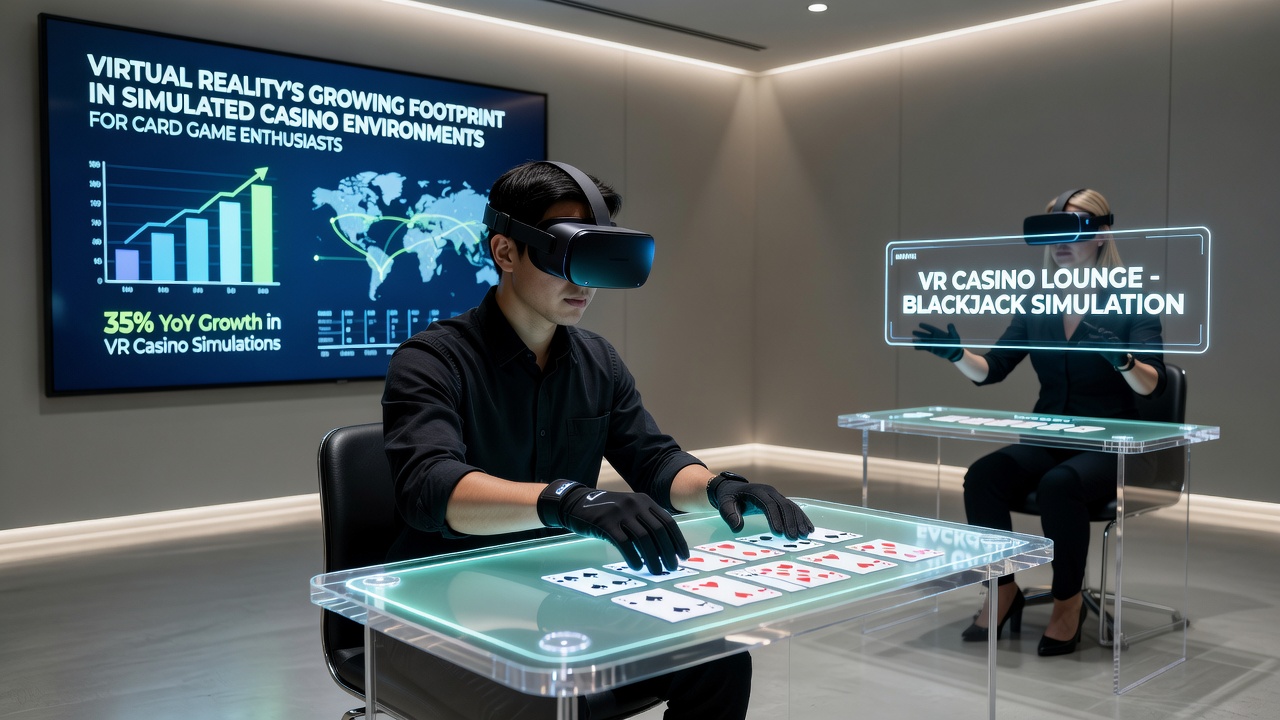
Virtual reality has carved out a distinct space in simulated casino environments, particularly for card game enthusiasts who seek more immersive experiences than traditional screen-based platforms can provide. Developers have integrated headsets with motion tracking and spatial audio to recreate the atmosphere of physical card tables, complete with virtual opponents and dynamic lighting that shifts based on game progression. As of August 2026, adoption metrics show steady increases in user sessions for VR-enabled card titles, driven by improvements in wireless headset comfort and reduced latency in multiplayer setups.
Technological Foundations Supporting VR Card Simulations
Hardware advancements allow players to handle virtual cards through hand gestures that mirror real-world movements, while software engines render detailed textures for chips, decks, and felt surfaces. Researchers at institutions focused on human-computer interaction have documented how these elements reduce the disconnect often felt in flat-screen versions of blackjack or poker. Data from industry reports indicate that frame rates above 90 per second combined with accurate hand tracking contribute to longer play sessions without reported motion discomfort in controlled tests.
Integration with existing casino platforms occurs through dedicated VR lobbies where users transition seamlessly between games such as baccarat, Texas hold'em, and three-card poker. Observers note that developers prioritize compatibility across major headset brands, ensuring that graphics settings adjust automatically to available processing power on user devices. This approach has expanded access beyond early adopters to a broader range of card game participants.
Card Game Variants Adapted for Virtual Environments
Blackjack tables in VR simulations feature rule variations drawn from regulated markets, including options for side bets and insurance that appear as interactive prompts within the player's field of view. Studies conducted on player behavior reveal that the ability to examine card backs and dealer actions from multiple angles influences decision patterns, though outcomes remain governed by the same random number generators used in non-VR versions. Poker rooms replicate tournament structures with avatar customization and voice chat features that facilitate table talk among remote participants.
Additional variants like Pai Gow and Caribbean stud have received VR updates that emphasize social components, such as animated reactions from non-player characters seated at the table. Figures from platform analytics demonstrate that these features correlate with higher retention rates when compared to solo-play modes. Regulatory bodies in various jurisdictions, including those overseen by the Nevada Gaming Control Board, have begun outlining guidelines for fair play verification in these immersive formats.
User Interaction Patterns and Accessibility Trends
Players report that spatial audio cues for shuffling sounds and chip clinks enhance focus during high-stakes hands, while customizable table perspectives allow individuals to adjust viewing angles without disrupting gameplay flow. Accessibility options now include color-blind modes and adjustable text sizes for in-game prompts, addressing feedback collected from earlier VR deployments. Those who have examined session logs across multiple platforms find that average dwell time in card-focused VR environments exceeds that of standard online tables by measurable margins.
Regional differences emerge in adoption, with North American and European markets showing faster integration of VR card features due to established infrastructure, whereas Asia-Pacific operators emphasize mobile-linked VR experiences that sync with handheld controllers. A collaborative report issued by the Responsible Gambling Council in Canada highlights ongoing work to embed responsible play tools directly into VR interfaces, such as session timers that appear as floating notifications.
Regulatory and Security Considerations
Compliance frameworks require that VR card outcomes undergo the same auditing processes applied to conventional online games, ensuring transparency in random generation and payout calculations. Security protocols incorporate end-to-end encryption for gesture data and account linkages, reducing risks associated with shared virtual spaces. Experts in digital security have identified that multi-factor authentication combined with biometric headset verification provides an additional layer of protection for high-volume card players.
Industry associations continue to track cross-border play issues, particularly when users from different regulatory zones interact at the same virtual table. These discussions have prompted standardized reporting requirements that capture both financial transactions and behavioral indicators within immersive sessions.
Conclusion
Virtual reality continues to extend its presence in simulated casino card environments through incremental hardware gains and refined software adaptations. Card game enthusiasts benefit from these developments via enhanced sensory feedback and expanded social options that align with established game rules. Ongoing collaboration between developers, regulators, and research groups supports measured expansion while maintaining core standards for fairness and security across platforms.