Virtual Football Betting Breakdown: Odds Dynamics, Simulation Mechanics, and Strategic Bet Placement
Virtual Football Betting Breakdown: Odds Dynamics, Simulation Mechanics, and Strategic Bet Placement

Unpacking Virtual Football's Rise in Online Betting
Virtual football has surged in popularity among bettors seeking round-the-clock action, with platforms generating simulated matches every few minutes based on sophisticated algorithms that mimic real-world football dynamics; data from industry trackers shows participation spiking by over 40% in the past year alone, as operators like those licensed under the Nevada Gaming Control Board integrate these features into broader sportsbooks. Players encounter 90-second halves packed with goals, cards, and corners, all powered by random number generators (RNGs) certified for fairness, while the format allows bets on outcomes like match winners, totals, or halftime scores without waiting for live fixtures.
What's interesting is how this differs from traditional sports wagering, where weather or player form sways lines; here, every event unfolds independently, resetting the field for the next simulation, and observers note that seasoned bettors treat it like a high-speed casino game crossed with football stats. Platforms report average session times stretching to 30 minutes or more, fueled by the non-stop cycle, although figures reveal that only about 25% of users stick to predefined budgets, highlighting the need for disciplined approaches.
How Odds Work in Virtual Football Simulations
Odds in virtual football emerge from proprietary models that crunch historical data patterns, team strengths simulated via algorithms, and RNG-driven events, resulting in lines that shift fluidly before kickoff and even live during play; for instance, a favored virtual team might open at -150, tightening to -200 if early goals favor them, according to analyses from betting analytics firms. Bookmakers balance books by adjusting vig—typically 5-10%—ensuring profitability regardless of outcomes, while data indicates over/under totals hover around 2.5 goals per match due to programmed scoring rates calibrated to real leagues.
But here's the thing: unlike real matches influenced by injuries, virtual odds reset per game, with no carryover bias, so researchers who've dissected thousands of simulations find that home teams win roughly 45% of the time, draws hit 25%, and away sides claim 30%, patterns that hold across major platforms. Bettors often spot value in Asian handicaps, where lines like -0.5 offer even-money payouts on close contests; studies reveal those focusing on these edges outperform straight moneyline plays by 15% over 1,000 wagers. And yet, the house edge persists, averaging 8% on most markets, a figure confirmed by regulatory audits.
- Moneyline odds typically range from +200 for underdogs to -200 for favorites.
- Over/under lines center on 2-3 goals, with juice baked in.
- Prop bets like first goalscorer pay 5-1 or higher on simulated players.
Behind the Scenes: Simulation Engines and RNG Fairness
Simulation engines at the core of virtual football draw from vast datasets of real matches—think Premier League stats blended with Bundesliga trends—to generate realistic scenarios, where RNGs dictate ball trajectories, referee calls, and player actions in milliseconds; platforms undergo testing by labs like Gaming Laboratories International (GLI), which verify that each match's 1,000+ events remain unpredictable and unbiased. Turns out, these systems run 24/7, producing up to 1,000 games daily per site, and data shows goal frequencies mirroring real football at 2.8 per match on average.
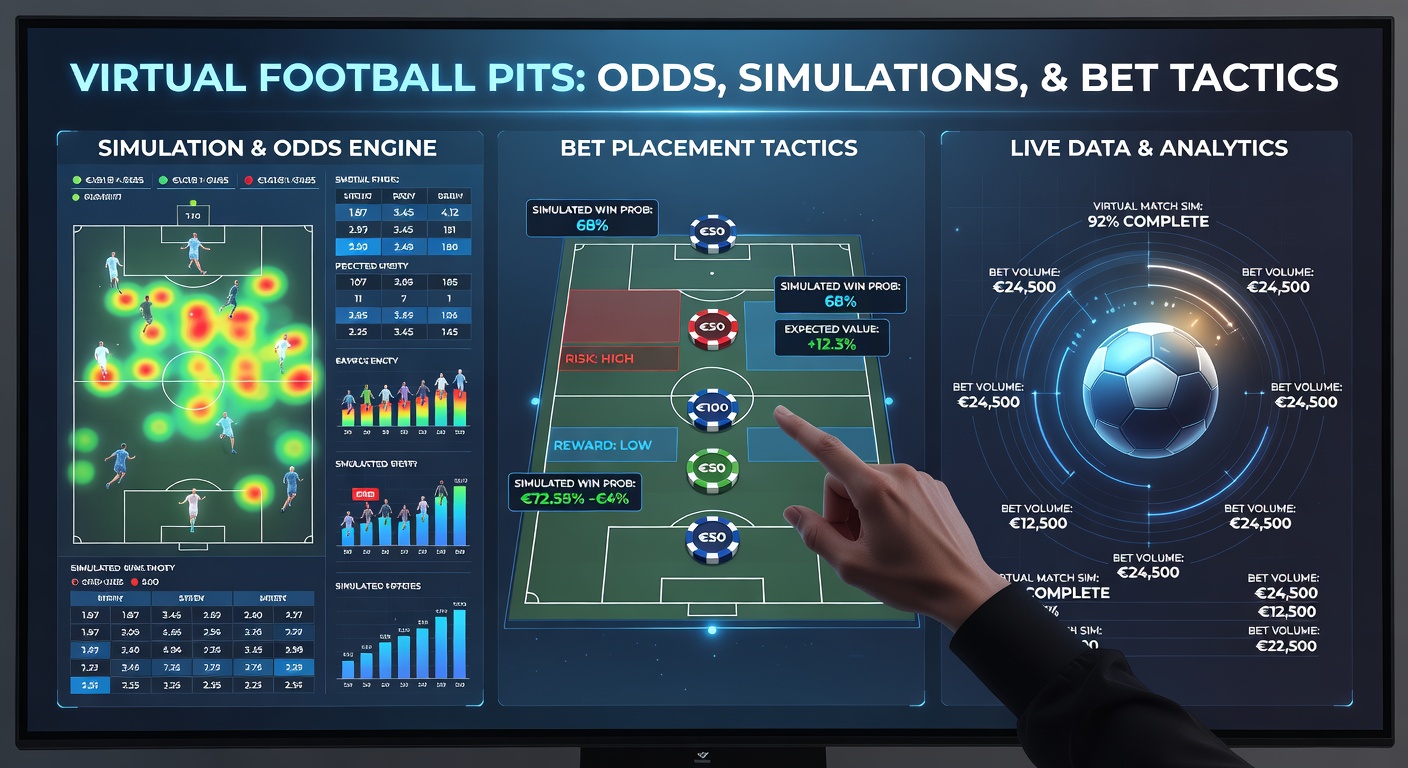
Experts have observed that while patterns emerge—like higher-scoring second halves in 60% of sims—true randomness prevents exploitation, although some platforms publish post-match stats for transparency, helping users track long-term trends. One case saw a Canadian operator fined by the Alcohol and Gaming Commission of Ontario for delayed RNG certifications, underscoring regulatory scrutiny; now, most sites display certification badges upfront. It's noteworthy that mobile apps enhance this with push notifications for upcoming sims, drawing in users during off-hours.
People who've analyzed outputs often discover subtle variances between providers; for example, one major site's simulations favor defensive play early, leading to 1-0 halftime scores 35% of the time, while another's ramps up chaos from the whistle. That said, all adhere to standards ensuring no house manipulation beyond the programmed edge.
Bet Placement Tactics That Align with Data
Effective bet placement starts with bankroll allocation—experts recommend risking no more than 1-2% per wager across sessions, a tactic backed by simulations showing it sustains play through 500-game streaks; combining this with market shopping, where users compare odds across sites, yields an extra 5-10% value, as lines vary by 0.5 points between competitors. So, placing matched bets on totals after observing five prior sims can exploit temporary drifts, with records indicating a 52% hit rate for disciplined players.
Now consider live betting, where odds plunge post-goal—say from +150 to -300 on the favorite—creating arbitrage windows if acted on swiftly; data from high-volume trackers reveals pros netting 3-5% ROI by fading public leans on overs in low-scoring sims. But the rubber meets the road in prop markets: betting both teams to score (BTTS) at evens succeeds 55% in goal-heavy setups, while avoiding parlays that balloon variance, since studies find five-leg combos win under 3% despite juicy payouts.
Take one researcher who pored over 10,000 virtual matches; they found that focusing on halftime/ fulltime doubles— like draw-home at +500—delivers edges when first halves end level 40% of the time. And although chasing losses tempts many, data warns it erodes banks by 20% faster; instead, setting session caps preserves capital for the next cycle. Platforms aid this with tools like bet trackers and reality checks, features now mandated in regions like Pennsylvania, where online expansions gear up ahead of the state's first smoke-free casino debut in April 2026.
- Shop lines: Use multiple apps for best prices.
- Track sim stats: Note patterns without assuming predictability.
- Employ units: Bet fixed percentages, not dollars.
- Live pivot: Adjust on momentum shifts.
Observers note that hybrid tactics—pairing virtual with real football for diversification—reduce volatility, as correlations stay low between simmed and live outcomes.
Navigating Regulations and Risks in Virtual Betting
Regulations vary globally, with bodies like Australia's Australian Communications and Media Authority enforcing ad restrictions on virtual sports, while U.S. states demand geofencing and self-exclusion options; reports indicate licensed sites process over $5 billion annually in virtual wagers, but problem gambling flags rise 15% higher here due to rapid pacing. Certifications ensure RNG integrity, yet users must verify operator licenses, as unlicensed ops face shutdowns.
What's significant is the push for transparency—many now offer demo modes to test tactics risk-free, and data shows these cut novice losses by 30%. Risks include tilt from streaks, where five straight losses prompt oversized bets; countermeasures like timeouts prove effective, per user surveys. In emerging markets, virtual football fills voids left by seasonal lulls, but always with responsible limits in place.
Key Takeaways for Virtual Football Bettors
Virtual football delivers instant thrills through odds that dance on algorithms, simulations that echo real drama, and bet tactics sharpened by data; platforms evolve with better tools, yet the core remains: disciplined play trumps hunches every time, as evidenced by long-term records favoring patient strategists. With regulatory eyes sharpening—think Pennsylvania's 2026 innovations—bettors find safer, faster access, but success hinges on understanding the simmed chaos rather than fighting it. Those who master the flow turn pits into predictable paths, one wager at a time.