Synchronizing Live Event Data Across Betting Interfaces in Virtual Football Environments
Written by Harper Neumann · Aug 25, 2026
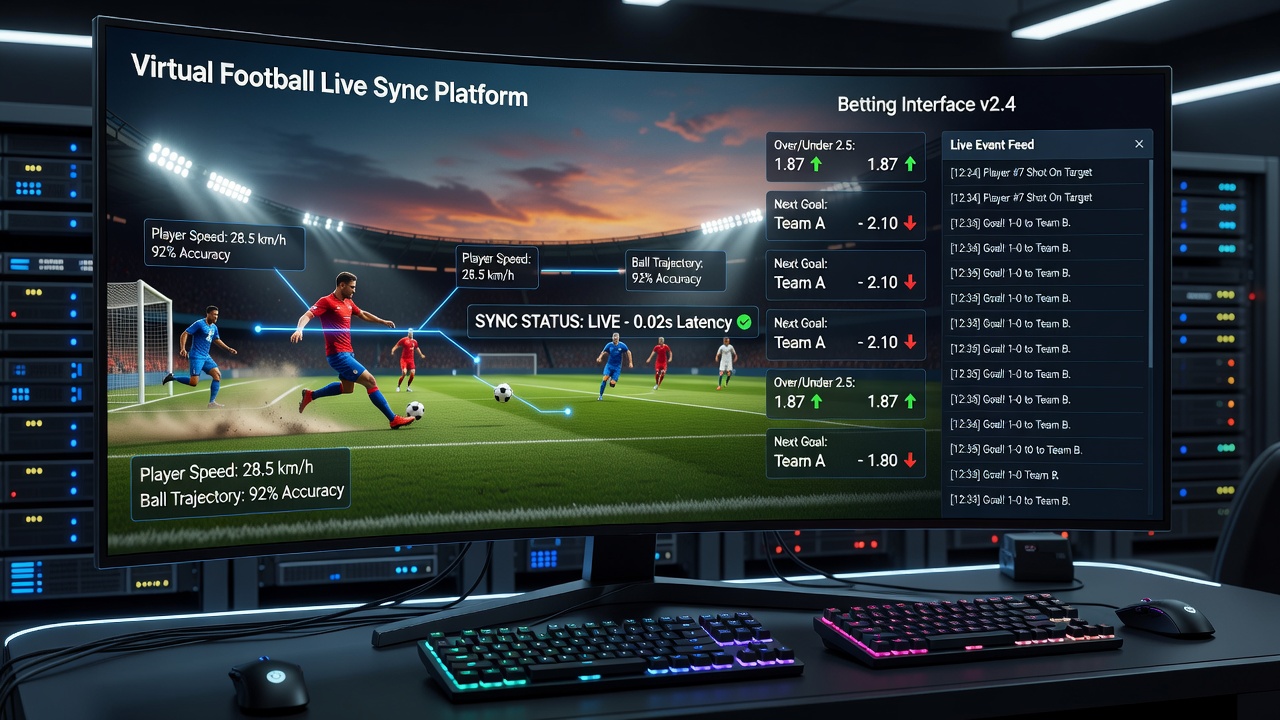
Synchronizing Live Event Data Across Betting Interfaces in Virtual Football Environments
Virtual football gambling environments rely on precise synchronization between simulation engines that generate match events and the betting interfaces that display odds along with accept wagers, and this process involves continuous data streams that update player positions, ball movements, and scoring incidents within milliseconds of each simulated action.
Simulation software produces thousands of data points per second while betting platforms must reflect those changes instantly to maintain accurate odds and prevent discrepancies that could arise from even brief delays, and developers achieve this through dedicated application programming interfaces that transmit structured event packets over low-latency networks.
Core Components of Data Synchronization Systems
Event generators create structured outputs that include timestamps, player identifiers, and action codes, then middleware layers translate those outputs into formats compatible with betting engines so that odds calculations adjust automatically when a virtual goal occurs or a key player substitution takes place. Observers note that packet prioritization algorithms ensure critical events such as goals or penalties reach the interface first while secondary statistics like possession percentages follow in subsequent updates, and this ordering prevents betting users from acting on outdated information.
Database replication techniques maintain mirrored copies of live match states across multiple servers, which allows interfaces located in different regions to pull identical data sets without introducing version conflicts, and load balancers distribute incoming synchronization requests to avoid bottlenecks during peak periods when thousands of simultaneous users monitor the same virtual match.
Latency Reduction Techniques and Network Architecture
Edge computing nodes positioned near user clusters process incoming event data locally before forwarding aggregated results to central betting servers, and this approach cuts transmission times by handling initial parsing closer to the end user rather than routing every packet through distant data centers. Researchers discovered that combining content delivery networks with dedicated gaming protocols further stabilizes delivery, since these networks cache frequently requested match states and push incremental updates only when changes occur.
Protocols such as WebSocket connections keep persistent channels open between simulation sources and betting clients, enabling push notifications instead of repeated polling requests, and this method reduces server load while ensuring that bet placement windows close immediately after a triggering event registers in the system. Data indicates that average end-to-end latency in optimized setups now falls below 150 milliseconds according to benchmarks published by industry testing facilities.

Regulatory and Compliance Considerations
Authorities in multiple jurisdictions require audit trails that record every data packet exchanged during a virtual match so that disputes over bet timing can be resolved through timestamp verification, and operators implement cryptographic signing of event messages to prove that no alterations occurred between generation and display. In August 2026 several European regulators began requiring standardized logging formats that allow cross-border verification of synchronization accuracy, which has prompted platform providers to adopt unified schemas for event metadata.
Reports from the European Gaming and Betting Association highlight how compliance frameworks now emphasize real-time monitoring tools that flag any synchronization drift exceeding predefined thresholds, while separate guidelines from the Malta Gaming Authority focus on data integrity checks performed at regular intervals throughout each simulated fixture.
Integration Challenges and Technical Solutions
Variable simulation speeds across different virtual leagues create synchronization hurdles when one match runs at accelerated pace while another follows real-time pacing, yet middleware solutions normalize these rates by inserting buffer intervals that align event streams before they reach the betting layer. Those who've studied this know that clock skew between distributed servers can accumulate over long sessions, therefore systems deploy network time protocol adjustments that resynchronize server clocks every few minutes.
Take one implementation where experts found that combining redundant data paths with automatic failover routing maintained continuous updates even during partial network outages, and this redundancy proved essential for preserving user trust when high-volume betting periods coincide with infrastructure stress. Studies from academic gaming research centers show that hybrid architectures using both cloud and on-premise resources deliver the most consistent synchronization performance across diverse geographic deployments.
Future Developments in Synchronization Standards
Industry reports project that adoption of 5G and upcoming 6G wireless standards will further compress delivery times for event packets reaching mobile betting interfaces, while artificial intelligence models begin predicting likely event sequences to pre-load probable updates before they actually occur in the simulation. A research paper hosted by the University of Nevada, Las Vegas gaming laboratory outlines how predictive buffering could reduce perceived latency by an additional 30 percent in controlled tests.
These advancements continue to reshape how virtual football gambling environments operate, since tighter synchronization directly supports more granular betting options such as micro-wagers on individual player actions that require sub-second confirmation of outcomes.
Conclusion
Synchronization of live event data with betting interfaces remains a foundational element of virtual football gambling operations, and ongoing refinements in network design, protocol efficiency, and regulatory compliance continue to drive measurable improvements in accuracy and speed across platforms worldwide.