Browser Blackjack Shuffles: How Simulations Guarantee Random Outcomes
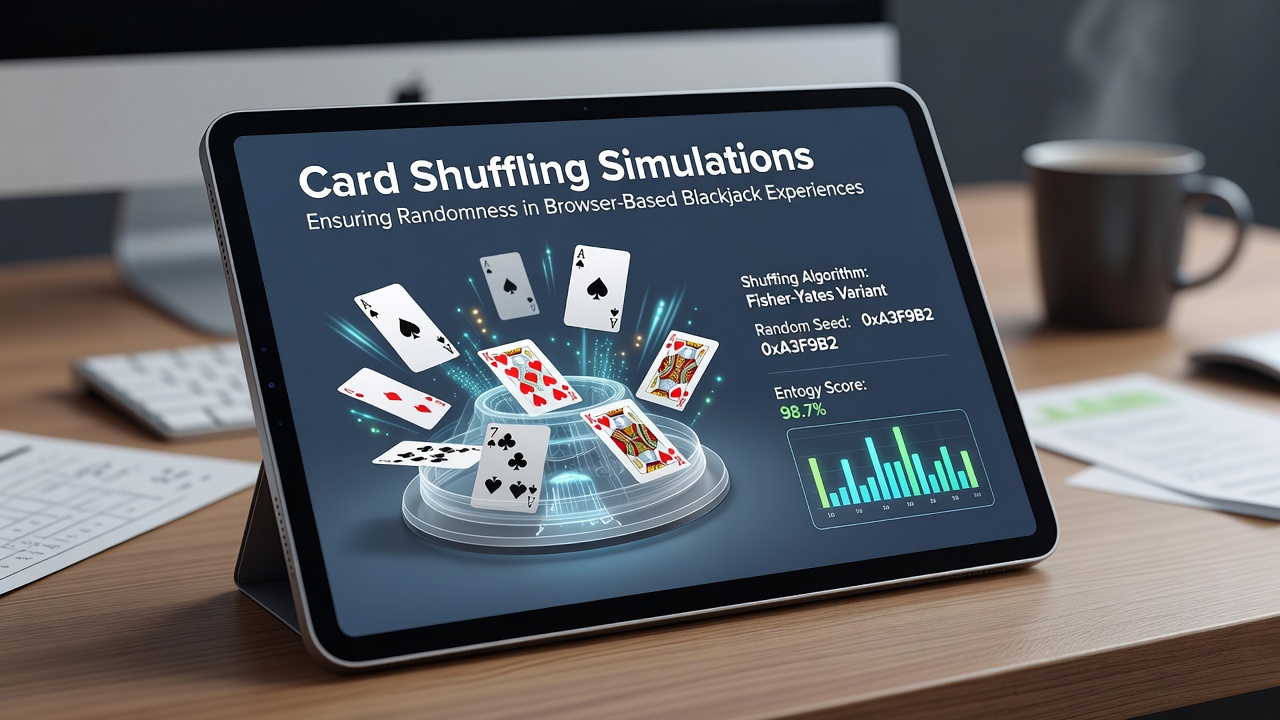
Browser-based blackjack relies on sophisticated shuffling simulations to replicate the unpredictability of physical decks, and developers integrate these systems directly into web applications so players encounter fair distributions each hand. Research indicates that modern browsers execute these algorithms in real time using JavaScript environments combined with cryptographically secure random number generators, while data from industry reports shows consistent testing protocols that verify uniformity across millions of simulated deals.
Core Mechanisms Behind Digital Shuffles
Card shuffling simulations in browser blackjack start with pseudorandom or true random seeds drawn from system entropy sources, then apply algorithms such as Fisher-Yates to reorder virtual decks without bias. Observers note that this method processes permutations in linear time, which keeps latency low even on mobile connections, and studies from academic computing departments confirm that properly implemented versions produce distributions matching theoretical probabilities for card sequences.
Web standards from organizations like the World Wide Web Consortium support access to high-entropy randomness through APIs, allowing simulations to avoid patterns that weaker generators might introduce. Those who've examined live deployments find that developers often layer multiple entropy pools from hardware events and network timing to strengthen the seed before the shuffle begins.
Testing Randomness Through Repeated Simulations
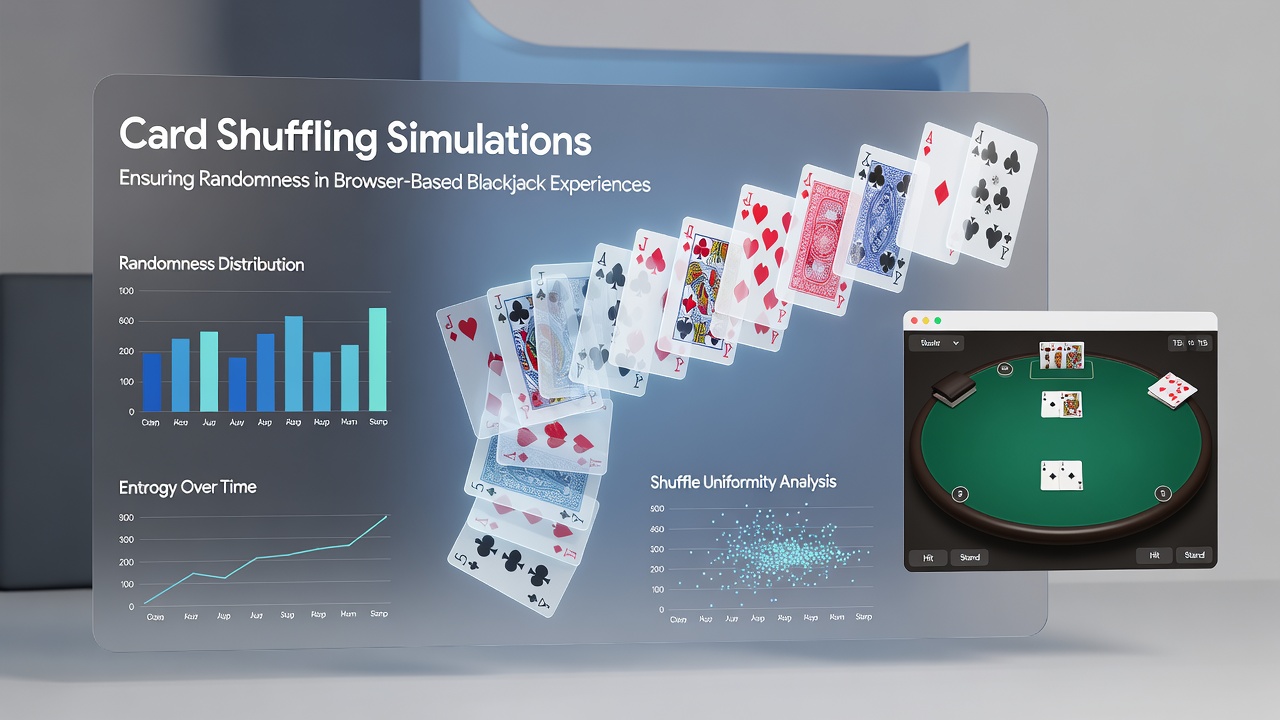
Validation processes run thousands of simulated shuffles against statistical benchmarks including chi-square tests and serial correlation checks to detect any deviation from expected randomness. Figures from regulatory testing laboratories reveal that acceptable variance thresholds sit well below levels that would influence gameplay outcomes, and experts apply these same protocols across different browser platforms to confirm consistent behavior.
One simulation framework used by several gaming operators executes batch runs that compare results against physical deck benchmarks collected over years of controlled trials. Data indicates that browser implementations now achieve parity with dedicated hardware shufflers in terms of measured entropy, although network conditions can still introduce minor timing variations that developers monitor continuously.
Regulatory Oversight and Geographic Standards
Agencies such as the Nevada Gaming Control Board require independent audits of shuffling code before any browser blackjack product receives approval for real-money play. Reports from these evaluations document pass rates above 99 percent when algorithms undergo full cycle testing, and similar frameworks operate through bodies like the Alcohol and Gaming Commission of Ontario in Canada as well as the Australian Communications and Media Authority.
Academic research published in 2025 examined browser RNG implementations across multiple jurisdictions and found that simulation-based verification catches edge cases missed by basic statistical suites alone. As of July 2026, updated certification guidelines emphasize continuous monitoring rather than one-time approvals, which means operators must submit fresh simulation datasets at regular intervals to maintain compliance.
Performance Considerations in Web Environments
Browser constraints such as single-threaded execution and memory limits push developers toward optimized shuffle routines that complete within milliseconds. Engineers achieve this by precomputing partial permutations during idle periods and storing only the final deck state, while performance logs from production systems show average shuffle times under 50 milliseconds on standard connections. Those monitoring these metrics observe that WebAssembly modules further accelerate the process without compromising the randomness properties verified in earlier simulations.
Conclusion
Card shuffling simulations form the foundation of fairness in browser blackjack by combining secure randomness sources with rigorous statistical validation. Regulatory bodies across North America and Australia continue to refine testing requirements, and ongoing academic work supports incremental improvements in algorithm efficiency. The result remains a system where each hand reflects the same probability distribution found in physical play, maintained through code that undergoes repeated examination before and after deployment.